Ora - An Interactive Eclipse
The Intersection of Art, Design, and Psychology
Presented at the 2020 Triennial, alongside the National Gallery of Victoria’s collection of early 20th-century design, Ora is an interactive light sculpture that sits at the intersection of psychological inquiry and environmental design. It explores how our surroundings - specifically the quality and colour of light - profoundly shape human emotion and behaviour.
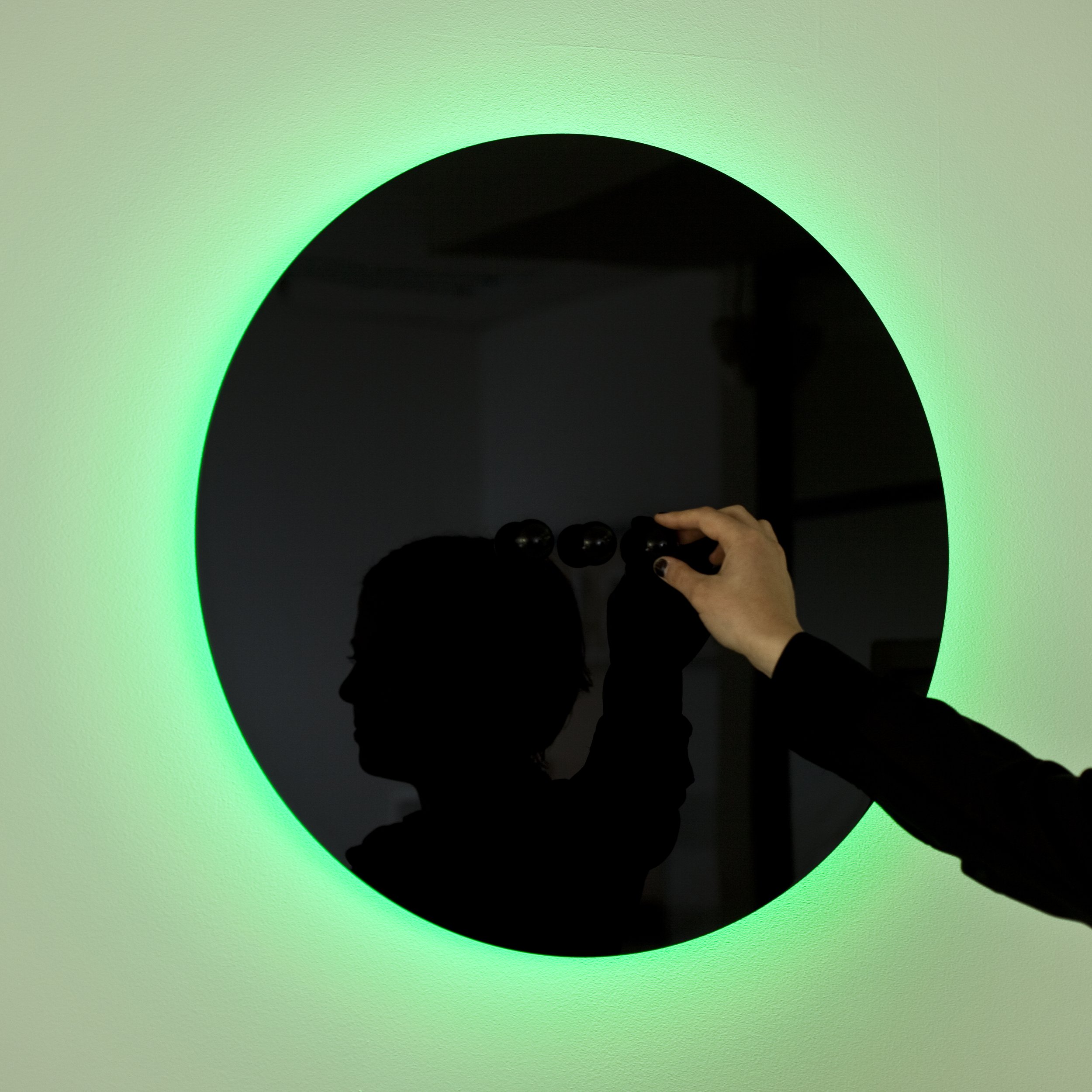
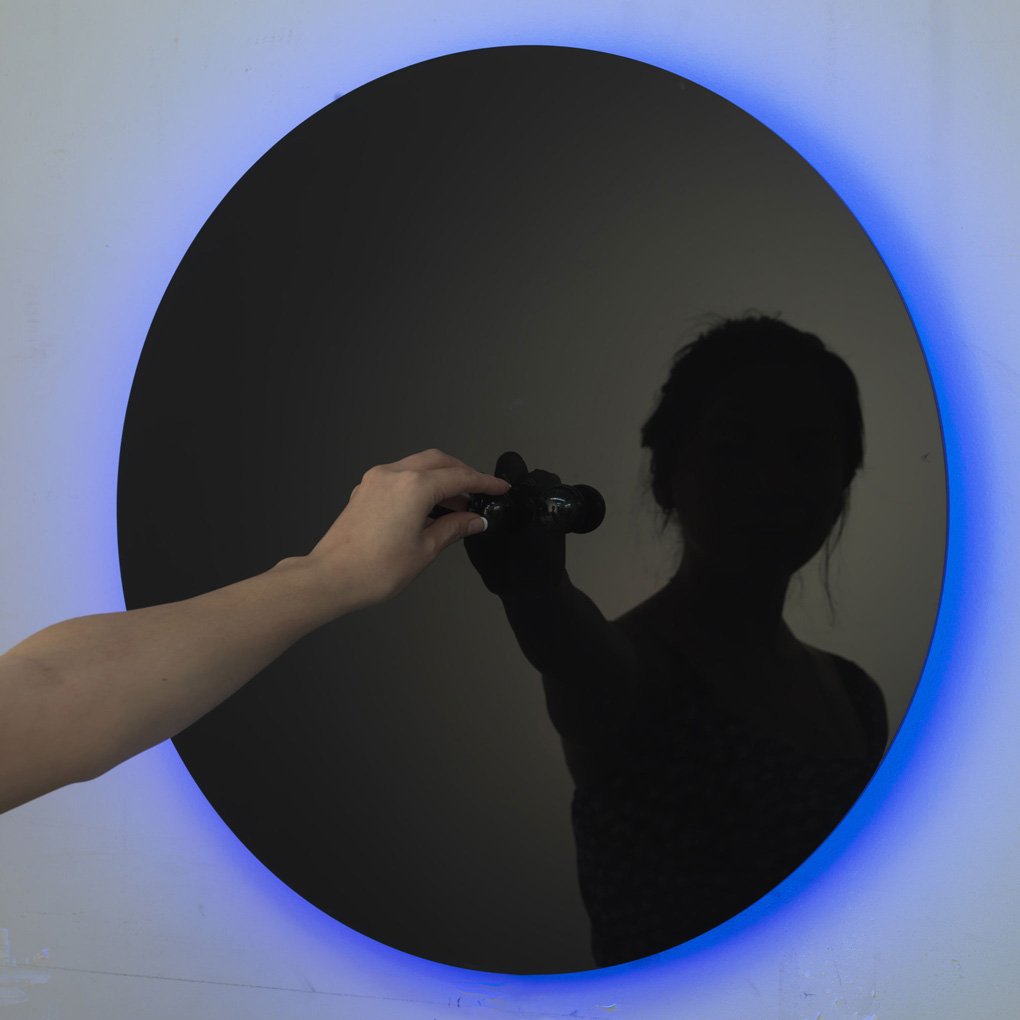
As a mediator between light and darkness, Ora invites users into a tactile exploration of the RGB spectrum. Through three interactive spheres integrated into its face, the user becomes the artist, manually mixing Red, Green, and Blue light to sculpt a personalized atmosphere. More than a luminaire, Ora is a tool for emotional expression, allowing the inhabitant to define the "aura" of their own space through the transformative power of transparent colour.
-
Ø600mm Black polymer face
Mild steel fixture, powder coated satin white
Backlit dials
RGB LEDs
Control gear and power supply
-
Ora. An interactive eclipse.
Designed by ILAN EL/ 2008.
The Concept: Experiencing Transparent Colour
Ora is an interactive "eclipse" that mediates between light and darkness through the medium of transparent colour. This work was born from an inquiry into the profound implications of colour psychology and a realization: coloured lighting is not merely decorative; it is essential to our living environments.
Since the dawn of time, humans have practiced "light worship," captivated by the way fire or a sunset releases us from the customary visual world. From the solemn, mystic light of Gothic cathedral windows to the high-drama scenery of modern theatre, light has always been used to generate atmosphere and evoke deep thought. Ora brings this power into the personal sphere.
Light, Colour, and Emotion
While historical colour theorists often contradicted one another—leaving no "standard" for how colour affects the psyche—Ora acknowledges that the connection between hue and emotion is deeply personal. Whether it is the biological stimulation of cool blue light or the warmth of a reddish glow, Ora treats the user as the expert of their own experience. It provides the tools to create a "personal aura," where the reference between colour and emotion is defined by the individual.
Symbolism and Form
The circle is a universal signifier: the sun, the soul, and the eternal cycle. While philosophers like Henri Bergson viewed symbols as conventions that might hinder our inner lives, Ora aligns with John Dewey’s belief that our use of forms is exactly what makes us human.
Mounted to the wall, Ora echoes the sacred geometry of a cathedral’s rosette window. Its highly reflective substrate acts as a mirror, placing the user at the center of the work—reflecting their face back to them as they "paint" their environment with light.
Interaction and Technology
Ora transforms the act of illumination into a physical activity. Through the lens of "Activity Theory," the sculpture operates on two planes:
The External: The tactile engagement with the three integrated control spheres.
The Internal: The subjective choice of a specific hue to match a mood.
To achieve this, Ora harnesses RGB LED technology and OPTOTRONIC control gear. By manipulating three dials—one for each colour spectrum (Red, Green, and Blue)—the user can independently dim and mix channels to create a custom atmosphere. In doing so, the user is no longer a passive observer of light, but an active creator of their own environment.